
Picture this: you have a brilliant small business idea, a solid product or service, and the drive to make it work. But when it comes to your logo, website, or marketing materials, everything just looks… off. Sound familiar? That is where finding the right graphic designer can completely change the game for you.
Hiring a graphic designer for the first time can feel overwhelming, especially if you have never done it before. With so many options out there, how do you know who is actually the right fit for your business? The truth is, not every designer will be the perfect match, and choosing the wrong one can cost you time, money, and a whole lot of frustration.
The good news is that knowing what to look for makes the process so much easier. In this post, we are breaking down the key things you should pay attention to when searching for a graphic designer for your small business. Whether you are starting from scratch or looking to switch designers, these tips will help you make a confident, informed choice.
They Understand Your Business, Not Just Your Brief
Before any good designer opens a single software program, they should be asking you questions. Real questions. Not “what colors do you like?” but “who is your customer, what problem are you solving for them, and how do you want people to feel the moment they see your brand?” That distinction matters more than most business owners realize when they’re just starting out.
There is a significant difference between a designer who executes instructions and one who genuinely understands your goals. The first will give you something that looks fine. The second will give you something that works. That gap shows up immediately in the relevance of the output, and it becomes even more obvious when you try to use that design across a business card, a vehicle wrap, and a website.
For small and growing businesses in Kansas City, Overland Park, and Olathe, brand context is everything. A generic logo might look presentable on screen, but it says nothing specific about your business, your neighborhood, or the community you serve. If you are a contractor in Olathe building a reputation on reliability, or a restaurant owner in Kansas City connecting with the local Hispanic community, your brand needs to reflect that story. Generic does not do that job.
As brand strategist Sarah Robb explains, brand strategy is “a business tool, not just a creative brief.” A strong designer should be able to tell you exactly why they made a creative choice. Not just “it looks clean,” but something closer to: “We anchored this in navy blue because your audience values reliability, and this typeface communicates stability without feeling stuffy.” That kind of reasoning is what separates craft from guesswork.
As practitioners in the field note, creativity without strategy is just decoration. When a studio opens with a discovery conversation or a structured intake process before touching any design work, that is a strong signal they take your business seriously. At GTN Studio, that conversation is where every project begins.
They Can Take Your Design from Screen to Print
A beautiful logo means nothing if it falls apart the moment it leaves the screen. This is one of the most overlooked realities for small business owners shopping for design help, and it is worth understanding before you commit to anyone.
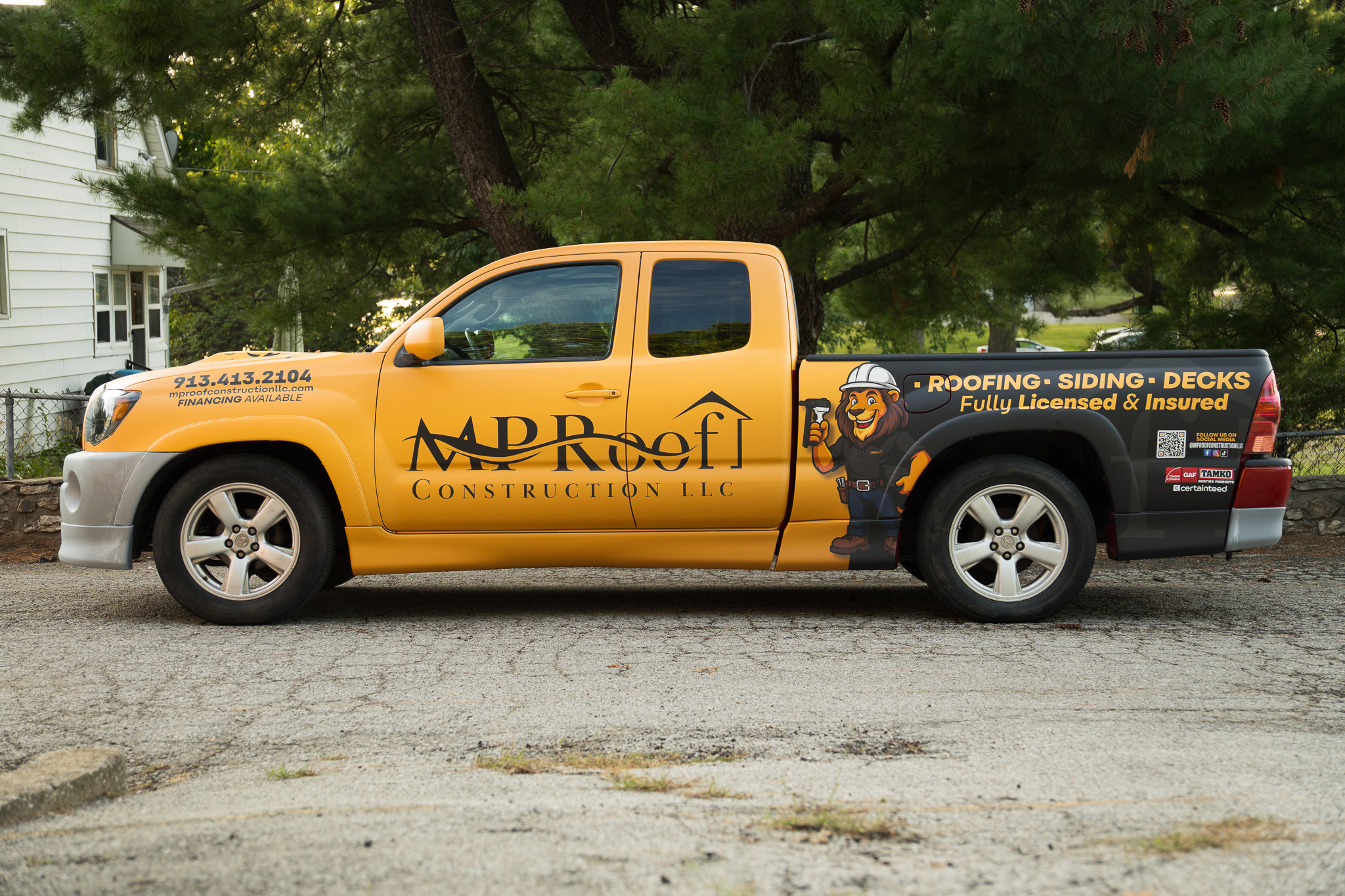
Most online design tools and remote freelancers deliver a digital file and consider the job done. But your business card, vehicle wrap, trade show banner, and embroidered polo all have to look just as sharp in the real world as they do on a monitor. That requires a completely different set of skills.
A designer who truly understands print production knows that color behaves differently depending on the surface. RGB color, which is what screens display, shifts when converted to CMYK for paper printing, and shifts again on vinyl wraps. Fonts that look clean on a webpage can become illegible when stretched across a 10-foot banner if the scaling is not handled correctly from the start. According to guidance on designing print-ready files for vehicle wraps and large format signs, vehicle wraps require files prepared at 75 to 150 DPI at final printed size, while business cards need 300 DPI. A screen-only designer rarely accounts for that difference.
Wide format printing, commercial vehicle wraps, business stationery, and apparel printing all require files built specifically for physical production, with proper bleed, safe zones, color separations, and vector paths that hold up at any size.
Working with a studio like GTN Studio, which handles both design and production under one roof here in Kansas City, removes the handoff errors that happen when a file passes between separate vendors. One team. One point of contact. No surprises at the printer.
When vetting any designer, simply ask whether they have direct experience preparing files for the specific output you need, whether that is a vehicle wrap, embroidered apparel, or wide format signage. The answer will tell you a lot about whether they are truly ready to bring your brand to life beyond the screen.
They Know How to Balance Trends with Timelessness
Good design is not about chasing whatever looks fresh this season. It is about knowing which directions actually serve your brand and which ones will make your business card look outdated before you have even finished the box.
In 2026, the hottest graphic design trends point toward purpose-driven minimalism as the dominant direction for small business branding. Clean layouts, intentional visual hierarchy, and fewer design elements working harder together. This approach builds trust faster because customers can immediately understand who you are and what you offer, without having to sort through visual clutter to find your message.
Typography is also playing a bigger role than ever. Bold, expressive headline fonts paired with clean, readable body text create a strong brand anchor that carries consistently across your website, your business cards, your vehicle wrap, and your social media. That consistency is what turns a font choice into a recognizable brand asset over time.
According to design trend research for 2026, authentic visuals are replacing generic stock photography at a significant rate. Real team photos, custom illustrations, and behind-the-scenes imagery connect with customers in ways that polished but impersonal images simply cannot. Consumers are increasingly skeptical of brands that feel manufactured rather than genuine.
A skilled graphic designer helps you adopt what actually fits your business and your audience in Kansas City, Overland Park, or Olathe, while steering you away from trends that peak and fade within a year or two. Modern does not mean gimmicky. Your branding should look current and feel grounded, not like it is trying too hard to keep up.
They Are Honest About AI Tools and When to Use Them
Here is something that separates a genuinely skilled graphic designer from someone who is just winging it: they will tell you exactly how they use AI tools, and why.
Tools like Canva Magic Studio and Adobe Firefly are real, widely adopted, and genuinely useful for the right tasks. Resizing assets, generating initial concept variations, automating repetitive formatting work: these are areas where AI saves real time. A designer who pretends these tools do not exist is not being straight with you, and that is worth paying attention to.
The honest truth is that AI handles speed and repetition well. What it cannot do is understand your brand story, your customers, or the cultural context behind your business decisions. If you are a family-owned business in Olathe serving a tight-knit community, no AI tool can grasp what that identity means or how to express it visually. That requires a human who listens, asks the right questions, and brings genuine creative judgment to the table.
Consumer skepticism around AI-generated visuals is also growing fast. Research from Emplifi shows that 83% of consumers want to know when AI has been used, and 56% say transparent labeling actively builds trust. High-profile stumbles from major brands have made audiences sharper about spotting work that feels hollow or generic. That skepticism is actually raising the perceived value of authentic, human-crafted design right now.
The right designer uses AI where it saves time and applies human judgment where it matters: brand voice, visual storytelling, and consistency across every touchpoint, from your business cards to your vehicle wrap. At GTN Studio, every project reflects that balance, with hands-on attention from concept to final delivery.
Before you invest, ask your designer to walk you through their process. If they cannot clearly distinguish what they designed from what a tool generated, that is important information.
They Have Verifiable Work and Real Client Reviews
A portfolio shows you what a designer is capable of producing. Verified client reviews show you what it is actually like to work with them, and when you are trusting someone with your brand identity, both pieces of the picture matter equally. A polished portfolio without any outside validation is a one-sided story. You deserve the full one.
When you are evaluating reviews, look specifically for third-party platforms where feedback cannot be cherry-picked or quietly removed. The details clients mention are the most telling part: did the designer communicate clearly throughout the project? Did they deliver on time? How did they handle unexpected problems or revision requests? Vague praise like “great to work with” is much less useful than a review that says the studio delivered event signage ahead of schedule and walked the client through every step. That kind of specific feedback tells you what the working relationship actually feels like.
GTN Studio has completed over 200 projects with a 5/5 rating on Clutch, a verified B2B review platform where client interviews are conducted directly and results cannot be self-reported or fabricated. That volume of work at a consistent rating is not luck; it reflects reliable processes and genuine follow-through across a wide range of real client projects. It is the kind of benchmark worth keeping in mind as you compare any design partner.
Breadth of work matters too. A studio that has handled logos, vehicle wraps, event signage, and branded apparel for businesses across Overland Park and Olathe has already navigated the kinds of challenges your project will likely bring. And do not hesitate to ask a studio for references from clients with similar scopes. A confident, experienced team will welcome that question without hesitation.
They Work Within Your Timeline and Communicate Clearly
As a small business owner, you probably do not have six weeks to wait on a logo while a product launch is approaching or a trade show deadline is staring you down. Timelines are not just a scheduling preference; they reflect whether a designer actually respects how your business operates. When a studio asks about your deadline upfront and builds the project around it, that is a signal they understand the real world you are working in.
Fast turnaround is worth examining more closely, though, because speed and quality are not opposites when a studio is properly organized. An experienced team has structured workflows, clear internal processes, and enough hands-on practice to move efficiently without cutting corners. According to Clutch’s 2026 graphic design industry report, design is now embedded in core business operations, which means professional responsiveness is simply part of what the job requires.
Clear communication matters just as much as speed. You should always know where your project stands, what comes next, and how to give feedback that actually moves things forward, rather than creating confusion. Before hiring anyone, ask directly: How many revision rounds do you include? How do you prefer to receive feedback? What happens if my timeline shifts? Those answers will tell you more about the working relationship than any portfolio sample ever could.
Businesses are also increasing their design budgets in 2026, treating creative work as a genuine investment rather than a line item to minimize. That shift means you have every right to expect organized, communicative, and accountable partners in return, right here in Kansas City.
They Understand Your Customers, Including Cultural Nuance
Good design does not speak to everyone in the same way, and that is not a flaw in your audience. It is just how visual communication works. Color associations, typography choices, imagery, and even the way a layout flows on a page carry different meanings depending on who is reading it and what cultural context they bring with them. A color palette that feels energetic and celebratory to one community might read as cautionary or mournful to another. A design that feels warm and inviting to one customer group might feel cold or impersonal to someone else. This is not about preference. It is about whether your brand actually connects with the people you are trying to reach.
For business owners in Kansas City’s Hispanic business community, this goes well beyond aesthetics. Working with a graphic designer who understands bilingual presentation, culturally resonant visual cues, and the values your customers genuinely hold is not a bonus feature you can add later. It is a starting requirement. A Spanish-language version of your materials that simply translates English copy without adapting imagery, layout logic, or visual hierarchy is not culturally fluent design. It is a workaround, and customers can feel the difference immediately.
As AIGA’s Eye on Design has pointed out, most design education and practice defaults to a narrow, Westernized visual standard. Designers who actively break from that default are the differentiated option, and they are the ones who help your brand feel genuinely welcoming rather than like a borrowed template with your name swapped in.
This kind of cultural intelligence cannot be automated or generated by a template tool. It comes from lived experience, active listening, and a design process that keeps your specific customer at the center of every decision.
When you are evaluating a graphic designer in Kansas City, Overland Park, or Olathe, ask them directly whether they have experience creating materials for multicultural audiences or bilingual business environments. Do not settle for a vague yes. The depth, specificity, and confidence of their answer will tell you everything you need to know about whether they are truly equipped to serve your community.
They Act as a Partner, Not Just a Vendor
There is a meaningful difference between someone who sends you a file and someone who actually shows up for your business. A vendor completes a task. A creative partner learns your goals, anticipates what comes next, and stays engaged from the first conversation all the way through to the finished product in your hands, on your storefront window, or across the side of your vehicle.
That distinction matters even more when your brand lives across multiple formats. When a single studio handles your logo, your business cards, your wide format signage, your vehicle wrap, and your website, the vision stays intact because the same team is carrying it from one format to the next. Brand consistency across every touchpoint builds the kind of subconscious recognition that earns customer trust over time, and that consistency is structurally difficult to achieve when your creative work is split across several unconnected people.
Fragmented vendor relationships introduce a coordination tax that most business owners do not see coming. Every handoff between a logo designer, a print shop, and a web developer is an opportunity for something to get lost in translation. Colors shift slightly. Fonts get substituted. Brand guidelines get interpreted differently by each person. Those small inconsistencies compound, and the result is a brand that feels disorganized even when your business is not.
An all-in-one creative partner also removes a real burden from your plate. Fewer points of contact means fewer approval loops, fewer repeat explanations, and a team that already knows your brand the moment you come back for the next project. That institutional knowledge has genuine value, especially for growing businesses in Kansas City, Overland Park, and Olathe where momentum matters.
The clearest signal that a studio is a true partner? They ask about where your business is headed, not just what you need today. That long-term curiosity is what separates a real creative relationship from a transaction.
They Are Local, Accessible, and Accountable
There is something genuinely different about working with a graphic designer who is part of your community. When you work with a local studio in Kansas City, you can pick up the phone and reach an actual person, stop by and look at physical print samples before committing to an order, and know that if something is not right, there is someone accountable on the other end. That kind of direct relationship is simply not something a remote service or a subscription platform can offer, no matter how slick their onboarding dashboard looks.
Local studios also understand the physical environments where your materials will actually live. A designer based in the Kansas City metro knows how signage reads on a Johnson County storefront, what visual language connects with customers in Overland Park and Olathe, and how a vehicle wrap performs in real traffic conditions on I-35. That firsthand knowledge shapes better creative decisions from the very start of a project.
It is worth knowing that national online design platforms have been marketing heavily to small business owners in recent years, often because those owners simply do not yet know a trusted local option exists. Working with a local studio means you are getting hands-on service, not a ticket number. When your event banner needs to be picked up the morning of a grand opening, or a vehicle wrap installation needs a final walkthrough, a local partner shows up in person.
The timing also matters. The global graphic design market is in a sustained growth phase, with industry data from the Bureau of Labor Statistics confirming the profession’s stable, skilled workforce well into the coming decade. Building a design relationship with a local Kansas City studio now means you grow with a partner who already knows your brand, rather than starting over every time a new project comes around.
Finding the Right Fit for Your Business
You have covered a lot of ground in this list, and each of those nine qualities matters: business understanding, print capability, trend judgment, AI transparency, verified reviews, timeline reliability, cultural fluency, partnership orientation, and local accountability. Together, they form a practical checklist you can actually use the next time you are evaluating a designer or a creative studio.
The bottom line is simple. Great design is an investment in how your business is perceived from the very first moment a customer sees your logo, your signage, or your website. The right designer makes that investment feel worthwhile, not stressful.
If you are a business owner in Kansas City, Overland Park, Olathe, or anywhere in the metro area, GTN Studio would love to have a conversation with you. No pressure, no confusing jargon, just a straightforward talk about your project and how we can help. With over 200 completed projects and a 5/5 client rating, our hands-on approach speaks for itself. Reach out whenever you are ready.
Conclusion
Finding the right graphic designer does not have to feel like a shot in the dark. By focusing on a strong portfolio, clear communication, relevant experience, and a pricing structure that fits your budget, you can confidently narrow down your options and find someone who truly understands your vision.
Remember, the right designer is not just someone who makes things look pretty. They are a creative partner who helps bring your brand to life and attract the customers you deserve.
Now it is your turn to take action. Start by writing down your design needs, set a realistic budget, and begin reaching out to designers who check your boxes. Your small business deserves a visual identity that works as hard as you do, and with the right designer by your side, that is absolutely within reach.