
Have you ever watched a product launch fail spectacularly, even though the team behind it worked incredibly hard? Or maybe you’ve used an app that felt so clunky and confusing that you wondered how it ever got approved? The problem often isn’t effort or budget. The problem is the approach.
That’s where design thinking comes in, and it might just be the game-changer your business has been missing.
Design thinking is a problem-solving framework that puts real people at the center of every decision. Instead of guessing what your customers want, you learn to truly understand them, test your ideas early, and refine your solutions before spending a fortune on something that misses the mark.
In this tutorial, we’re going to break it all down in plain, simple terms. You’ll learn what design thinking actually means, why businesses of all sizes are embracing it, and how you can start applying its core principles right away. No design degree required, no confusing jargon, just practical insights you can use starting today. Let’s dive in!
What Is Design Thinking, Really?
Have you ever paid good money for a logo or a banner, felt excited when you saw the finished file, and then watched it completely fall flat with your actual customers? You are not alone. That experience is more common than most designers will admit, and it almost always comes back to the same root cause: the design process started with aesthetics instead of people.
Design thinking flips that order entirely. At its core, design thinking is a human-centered problem-solving process that begins by deeply understanding the people you are designing for, long before anyone opens a design file or sketches a single idea. The American Marketing Association puts it plainly: when design is decoupled from the people it serves, it becomes nothing more than a hollow aesthetic exercise. That is a polite way of describing the frustration so many small business owners in Kansas City, Overland Park, and Olathe have felt after a rebrand that looked sharp but did not connect.
The process moves through five natural, intuitive stages: empathize, define, ideate, prototype, and test. These are not a rigid corporate framework; they are simply how any thoughtful creative professional thinks when they genuinely care about results. You observe and listen first, you name the real problem, you explore ideas broadly, you build something tangible to react to, and then you test it with real people before committing fully.
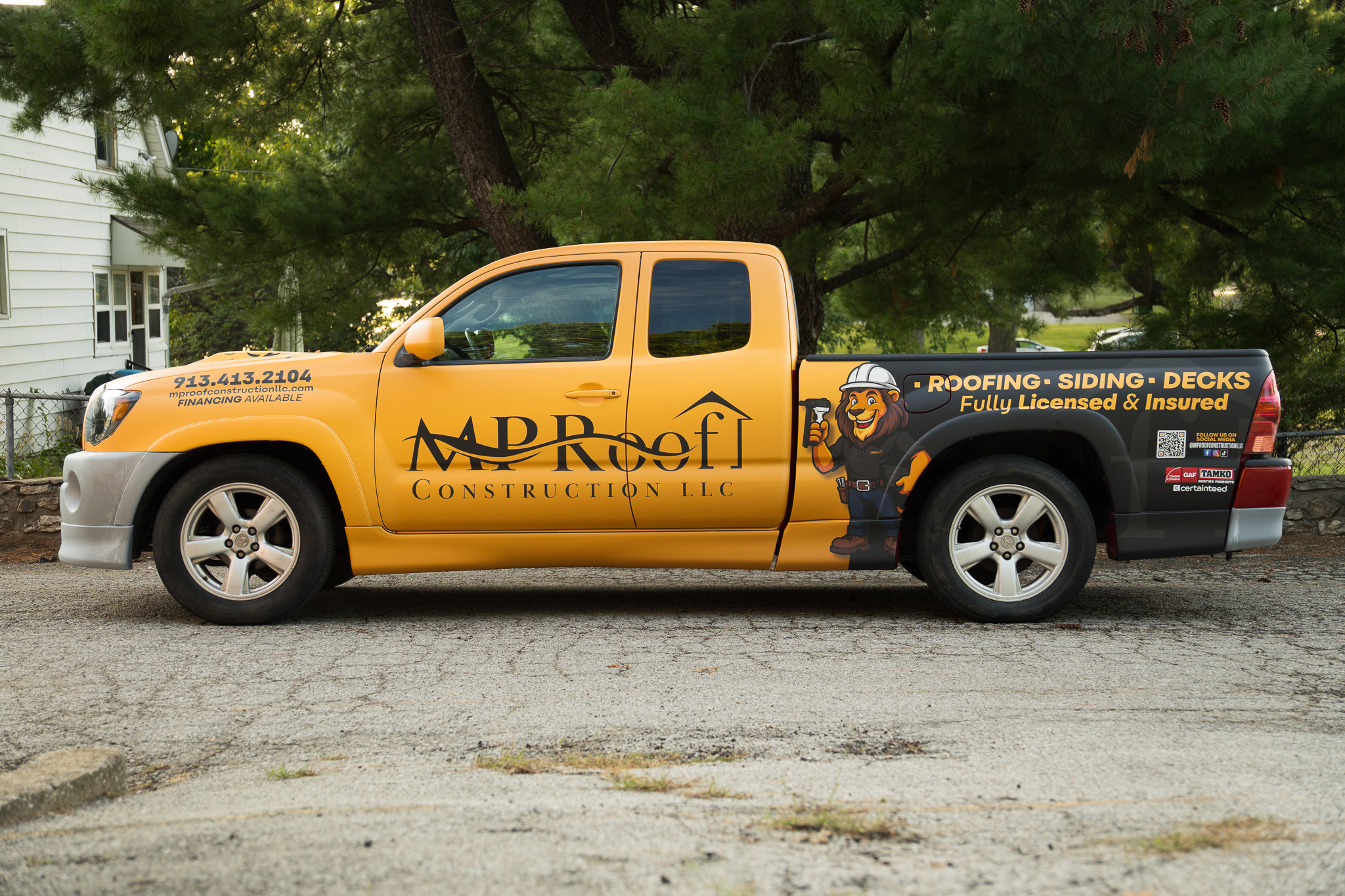
Here is the part worth emphasizing: design thinking is not reserved for Silicon Valley product teams or large agencies. It is just as relevant when designing signage, vehicle wraps, or business cards for a local contractor in Overland Park. Empathizing might mean asking who your best customer is and what they need to feel confident enough to call you. Defining might mean realizing the real problem is not “we need a new logo” but “nobody understands what we do in three seconds.” The stakes are concrete: skipping this process can mean reprints, lost foot traffic, and a brand that quietly confuses the very people it was meant to attract.
The 5 Stages of Design Thinking Applied to Physical Branding
Design thinking moves through five distinct stages, and when you understand how each one plays out in the real world of print and physical branding, the whole process starts to make a lot more sense. Let’s walk through each stage the way we actually apply it here in Kansas City.
Stage 1: Empathize
Before a single color is chosen or a font is selected, a good creative partner asks questions. Real ones. Who are your customers? Where do they live and work? What language do they speak at home? What does your block look, feel, and sound like on a busy Friday afternoon? For a vehicle wrap or event signage project serving businesses in Olathe or Shawnee Mission, empathy means understanding the street-level reality where that design will actually live and be seen. According to the American Marketing Association, design thinking puts human beings first, prioritizing the people for whom you are ultimately solving problems. That principle is not abstract; it shapes every creative decision that follows.
Stage 2: Define
Once you have listened carefully, the next step is naming the real problem with precision. Is the issue that no one can recognize your brand from across a parking lot? That your current business cards feel disconnected from the community you actually serve? Defining the right challenge is what prevents a team from delivering a beautifully executed solution to the wrong problem entirely. This stage saves time, protects your budget, and eliminates the frustration of redoing work that simply missed the mark. A clear problem statement acts as a compass for every creative decision made in the stages that follow.
Stage 3: Ideate
This is where creative exploration truly opens up. Multiple directions get sketched out, color palettes get tested, typography options get compared, and layout ideas get challenged before anyone commits to a single path. For apparel printing, screen printing, or embroidery projects, this stage carries special weight because catching a direction that does not work during ideation costs almost nothing. Catching it after production is a very different story. Stress-testing ideas early, when changes are still easy, is one of the most practical benefits design thinking brings to physical branding work.
Stage 4: Prototype
Prototyping in design thinking means building something tangible enough to evaluate before committing to full production. In a branding and print context, that looks like digital mockups, press proofs, and vehicle wrap previews. Seeing your logo scaled across the side of a work truck before the wrap goes to press is not just a quality check; it is a core principle of thoughtful design. The first version does not need to be perfect. It simply needs to be concrete enough to reveal what is working and what needs refinement.
Stage 5: Test and Refine
The final stage brings real people back into the conversation. Feedback from the business owner, their team, and sometimes their customers shapes the design into something that genuinely belongs to that brand and that community. This iterative loop, where you observe, adjust, and improve, is precisely what separates a polished, purpose-built design from a generic template that could belong to any business in any city. Figma’s design thinking framework reinforces that this process is non-linear by nature; you may revisit earlier stages as new insights emerge, and that flexibility is a strength, not a flaw. Great branding across the Kansas City metro area is rarely the result of a single pass; it is the result of a disciplined, human-centered process applied with care.
Why Design Thinking Matters More Than Ever in 2026
The creative world shifted meaningfully heading into 2026, and if you have been paying attention, you have probably felt it. Audiences are no longer impressed by polished, perfectly generated visuals. They want to feel something real.
Adobe’s 2026 Creative Trends Report identifies “All the Feels” as one of four defining creative movements of the year, calling out sensory, tactile, and emotionally resonant design as exactly what audiences are actively seeking. Think about what that means for physical branding. A vehicle wrap rolling through Olathe, a screen-printed shirt worn at a community event in Overland Park, a bold banner outside a Kansas City storefront. These are not digital impressions that scroll past in two seconds. They are tangible, real-world experiences that people can genuinely feel. Design thinking is the process that helps you create those experiences intentionally rather than accidentally.
The second relevant Adobe trend, “Local Flavor,” takes things even further by naming cultural authenticity and community connection as core creative values for 2026. This one matters deeply for businesses serving specific communities, because you simply cannot fake genuine local connection from a generic template. Design thinking’s empathy-first approach is precisely the process that makes culturally grounded, community-aware design achievable. It asks you to understand your customer’s world before you ever open a design file.
Then there is the question of AI. Today, the majority of brands have incorporated generative AI into their creative strategies in some form, and that number keeps climbing. AI tools can produce visuals quickly, but they cannot sit across a table from a business owner in Kansas City, ask thoughtful questions about their customers, and understand the nuance of a bilingual neighborhood or a family-owned business with a 20-year history in the community. That human judgment is exactly what design thinking preserves and elevates, especially as AI continues transforming creative work in 2026.
The bottom line is straightforward. Craft and intention are what separate memorable brands from forgettable ones right now. Design thinking is the discipline that keeps your creative work grounded in both.
Design Thinking and Kansas City’s Hispanic Business Community
Cultural authenticity in design is not a box you check once and move on. For business owners in Kansas City’s Hispanic community, it is an ongoing relationship built on trust, attention, and genuine understanding. A logo, a vehicle wrap, or a set of business cards that truly reflects your heritage and speaks your customers’ language does something no downloaded template ever could: it signals that you belong here, that you understand this community, and that your business is worth their loyalty.
This is exactly why the empathy stage of design thinking carries extra weight for bilingual and bicultural audiences. Color associations, typography choices, imagery, and even the rhythm of a tagline carry layered meanings that shift across cultural contexts. Warm reds that signal celebration in one tradition may communicate something entirely different in another. A font that feels modern and trustworthy to one audience may feel cold and distant to another. A creative partner who slows down to ask the right questions at the very beginning, and who listens carefully to the answers, will always produce work that lands more powerfully than one who simply applies whatever trend is circulating that month.
Adobe’s “Local Flavor” trend for 2026 puts a name to something Kansas City’s Hispanic business community has always known instinctively. Audiences want design that feels grounded in their specific neighborhood, not a polished, generic approximation of it. A food truck in Olathe, a family-owned restaurant in Kansas City, Kansas, or a service business in Shawnee Mission each has its own story, its own visual language, and its own customers who will recognize authenticity immediately. The Hispanic Chamber of Commerce of Greater Kansas City represents businesses across eight counties in the metro area, and that community is organized, growing, and investing in brand-forward thinking. Kansas City is also hosting two major national design conferences in 2026, including the 2026 UCDA Design Conference: Duality, which is exploring the tension between AI-generated content and genuine human creative voice. That conversation matters deeply here.
GTN Studio was built with this community in mind. From the very first conversation, every project begins with listening, with cultural awareness, and with real respect for each client’s vision. That is not a marketing position; it is simply how good work gets made.
Can AI Replace Design Thinking? Here Is the Honest Answer
Let’s be honest: generative AI tools are genuinely impressive, and no serious creative professional dismisses them outright. They accelerate concept generation, handle asset resizing, automate repetitive production steps, and can produce a dozen layout variations in the time it once took to sketch three. As IDEO’s learning platform has acknowledged, the most forward-thinking design institutions are now embedding AI directly into human-centered processes, treating it as a powerful instrument rather than a replacement for human judgment.
But here is where the honest answer gets important. AI does not empathize. It cannot walk a street in Overland Park and sense why a particular visual direction will feel right to the people who live and shop there. It cannot sit across from a business owner and ask what their grandmother’s bakery looked like, or why that memory is the emotional core of the brand they are trying to build today. A 2025 peer-reviewed study in PsyCh Journal found that while AI has evolved into an active creative collaborator, human oversight remains essential for maintaining a distinctive visual identity. Pattern recognition on training data simply cannot replicate the curiosity, listening, and cultural awareness that design thinking demands.
There is also a practical risk worth naming. When every business uses the same generative tools, visual identities start to converge. Your vehicle wrap, your signage, your branded apparel begin to look like everyone else’s. For small businesses across Kansas City building a real physical presence in their communities, that sameness is a genuine problem, not just an aesthetic one.
Design thinking fills the gap AI cannot close. The most effective creative work in 2026 combines the efficiency AI offers with the irreplaceable depth of a human-led process. For growing businesses investing in wraps, signage, and apparel, that human process is what makes the work worth doing right.
What Design Thinking Looks Like at GTN Studio
At GTN Studio, every project begins the same way: with a conversation. Not a design file, not a template, not a quote sheet. Before anything goes to press or into production, the team sits down to understand your business, your customers, and the context you are working in. Whether the project is a commercial vehicle wrap for a fleet operating across Kansas City, embroidered polos for a crew that is growing fast, or a full brand identity built from the ground up with a logo and business cards, the starting point is always the same question: what does success actually look like for you?
That first conversation is the empathy stage in practice. It is where the team stops assuming and starts listening. The goal is not to produce something that looks impressive in a portfolio; it is to create something that genuinely serves your business and connects with the people you are trying to reach. That distinction matters more than most clients expect it to, and it shapes every decision that follows.
With over 200 completed projects and a consistent 5/5 customer rating across the Kansas City metro area, including clients in Overland Park, Olathe, and Shawnee Mission, the GTN Studio process has been tested across a wide range of industries and design challenges. The through line in every single project is consistent: listen first, design second, refine together, and deliver on time.
Because every stage of production happens under one roof, from the initial concept through graphic design, wide format printing, screen printing and embroidery, website development, and promotional products, the insight gathered in that first conversation does not get lost. There are no handoffs to outside vendors who never heard your story. The thinking that shapes the concept carries forward all the way through to installation. That in-house continuity is what makes a repeatable, structured creative process more than just good intention; it makes it something you can actually feel in the finished product.
Start With the Right Questions
Design thinking is not a complicated framework reserved for big agencies or corporate strategy teams. At its core, it is simply a commitment to asking the right questions before making anything. Branding strategist Carina Duffy puts it plainly: the ability to ask great questions shows a deeper investment in the conversation you are having with your client. That philosophy is exactly what separates branding that blends into the background from branding that actually builds something real and lasting.
For small and growing businesses across Kansas City, Overland Park, Olathe, and the surrounding metro, this question-first approach is not a luxury. It is the foundation of every smart creative decision, from your logo and business cards to your vehicle wrap and your website.
If you are ready to start a project, or even just want to talk through what your business needs right now, GTN Studio is here to listen first and design second. The team puts your customers, your community, and your vision at the center of every decision. Reach out today and experience the difference that genuine, thoughtful craftsmanship makes.
Conclusion
Design thinking is not reserved for Silicon Valley giants or seasoned designers. It is a practical, people-centered approach that any business can adopt to solve real problems more effectively.
Here are the key takeaways to remember:
- Start with empathy. Understand your customers deeply before jumping to solutions.
- Embrace iteration. Test early, fail small, and refine often.
- Challenge assumptions. The obvious solution is rarely the best one.
- Collaboration drives better outcomes. Diverse perspectives lead to stronger ideas.
Now it is your turn. Pick one challenge your business is facing right now and apply just one design thinking principle to it this week. You do not need a perfect system to get started. You just need the willingness to think differently. Small shifts in approach can lead to breakthroughs you never expected.